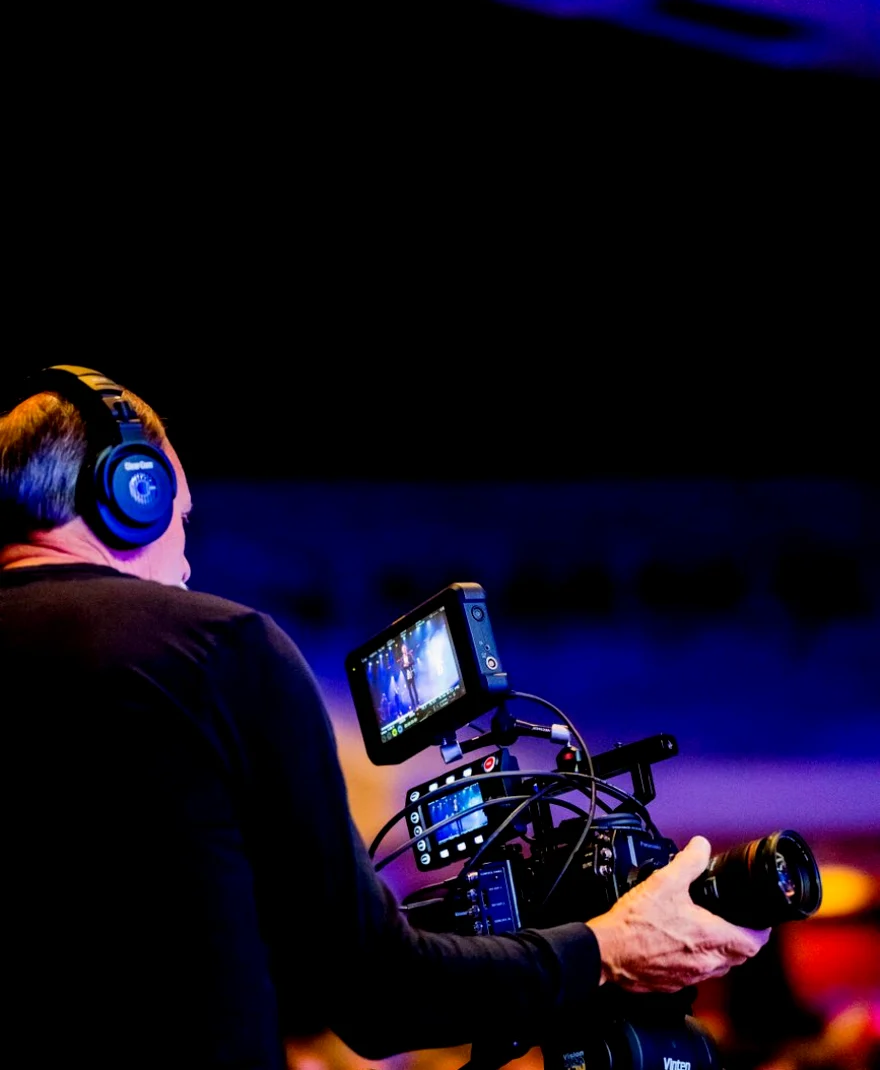
01Clear preparation
Before a show we agree the running order, camera positions and cue points in writing. Clients tell us this is the part that saves the most stress later. If something is unclear, we ask early rather than guess on the day. Changes made close to air are noted and passed to everyone in the gallery, so the crew works from one shared plan.
Quiet on the day
A well-run gallery sounds calm. Our vision mixers and operators talk in short, agreed phrases and keep the intercom free for what matters. When something goes wrong, which it sometimes does in live work, the response is measured and rehearsed. Clients often mention that they could concentrate on their guests or audience instead.
Honest follow-up
After a broadcast we go through what worked and what did not, including our own slips. Clients value hearing this plainly. We note the settings, the routing and the timings so that the next show with the same team starts from a better position, rather than from scratch.