
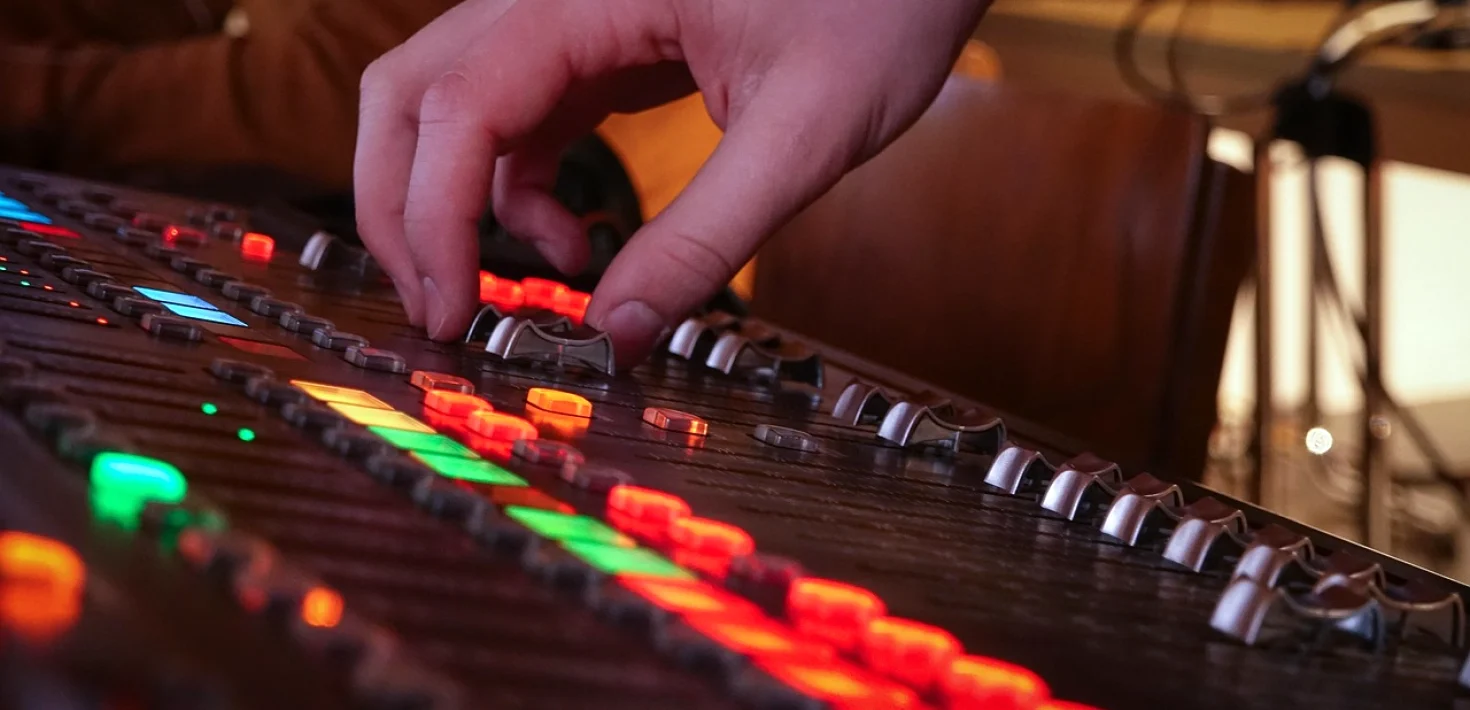
One Saturday of replay and graphics, seen from the gallery
A short story about Marcus, a community arena organiser, and the afternoon our real-time video operators took on replay, graphics and screen feeds for his live event.
A call about a screen that kept freezing
Marcus runs events at a mid-sized arena and came to us after an autumn fixture where the big screens had gone wrong twice. The replay machine lagged, the scoreboard graphic arrived late, and the crowd noticed. He did not want a grand redesign. He wanted someone to sit in the seat and make the screens behave.
I spoke with him twice before the show, mostly listening. He described what the audience saw, what the commentators needed and where he felt the show lost its rhythm. That conversation shaped everything we did later, because it told us which feeds mattered most and which could simply stay quiet.
Real-time video operation is often described as a technical job, and it is, but Marcus reminded me that it is first a listening job. The operators answer to what the room needs in the next ten seconds, not to a long plan written a week ago.
What we agreed to cover
Our brief was narrow and clear. Two operators would handle replay, graphics, playout and the screen feeds, while Marcus's own team kept control of the stage, the announcer and the timings. We did not take over the show; we took over the pictures that reach the screens.
Daniel, our technical engineer, visited the venue beforehand to trace the signal path from the cameras to the screens and to the small gallery space we would be working in. He found two cables that were too long and one input that was shared by accident, and he fixed those before anyone arrived.
We wrote a one-page running order that named every graphic, every playout clip and every point where a replay might be called. Marcus changed it three times, which is exactly what it was for.
- Replay, graphics, playout and screen feeds
- Marcus's team keeps stage and timings
- One-page running order agreed in advance
Setting up the gallery on the morning
We arrived early on the Saturday and built the operator positions before the doors opened. Each operator had a clear view of the programme monitor, the replay screen and a confidence feed of what the arena screens were showing. Comfort matters more than people think, because an operator who is cramped makes small mistakes by the third hour.
Priya joined briefly to check the switching feed, since the arena used a small camera package and she wanted the cuts to line up with our graphics. A short test run exposed a lower-third that sat too close to the screen edge, and we moved it.
By the time the first spectators arrived, every clip had been loaded, labelled and played once. Nothing about the set-up was dramatic, which is how we like it.
The moment a replay was called early
Midway through the afternoon, the match commentator asked for a replay a few seconds sooner than planned. Our replay operator had already marked the incident while it happened, so the clip was ready the moment the request came through the headset. It reached the screens cleanly and the crowd reacted as Marcus had hoped.
That is the quiet skill of the role. The operator is not waiting for instructions; they are tracking the action and preparing the next likely request. When the call comes, the work is mostly done.
Later a sponsor graphic arrived with the wrong spelling on one line. Because the graphics operator kept a corrected version on standby, the swap took seconds and the audience never saw the mistake.
What Marcus said afterwards
Once the arena had emptied, Marcus came to the gallery and thanked the crew. He said the screens had finally felt like part of the event rather than something to apologise for. He also asked a sensible question: how much of the improvement came from the people and how much from the preparation.
My honest answer was that the two are hard to separate. The preparation gave the operators room to be calm, and the calm let them respond well when the show moved off script. A rushed set-up would have asked far more of them.
We went through a short debrief that evening, noting what to keep and what to change. A few clip labels were renamed, and one graphic template was simplified for the next fixture.
What I take from it
Marcus's case is a small one, and that is why I like it. There was no giant crew or complicated rig, only a clear job, a short rehearsal and operators who knew where to look. Most live shows are like that, and most problems are solved in the hour before doors open.
If you are weighing up whether real-time video operation is worth adding to your event, think about the moments you want to get right rather than the equipment list. Replay, graphics and screen feeds sound separate, but the audience experiences them as one picture.
- Decide which moments must go right
- Share your running order early
- Give operators a clear view and a calm seat
Marcus has since booked us for the rest of his season, and the routine has settled into something almost uneventful. That is the best compliment a live operator can receive. If you have an event where the screens matter, tell us what the audience should see and when, and we will work out the rest together from the gallery.
Hannah Whitlock
Streaming ProducerHannah plans streaming workflows and graphics for online events. She works closely with clients before, during and after each show.
Tell us what your screens need to do
Send us a few lines about your event and we will reply to talk through replay, graphics and screen feeds, and what an operator would handle for you.
Contact- Describe the event and its date
- Share your running order if you have one
- We reply with questions and a plain plan