
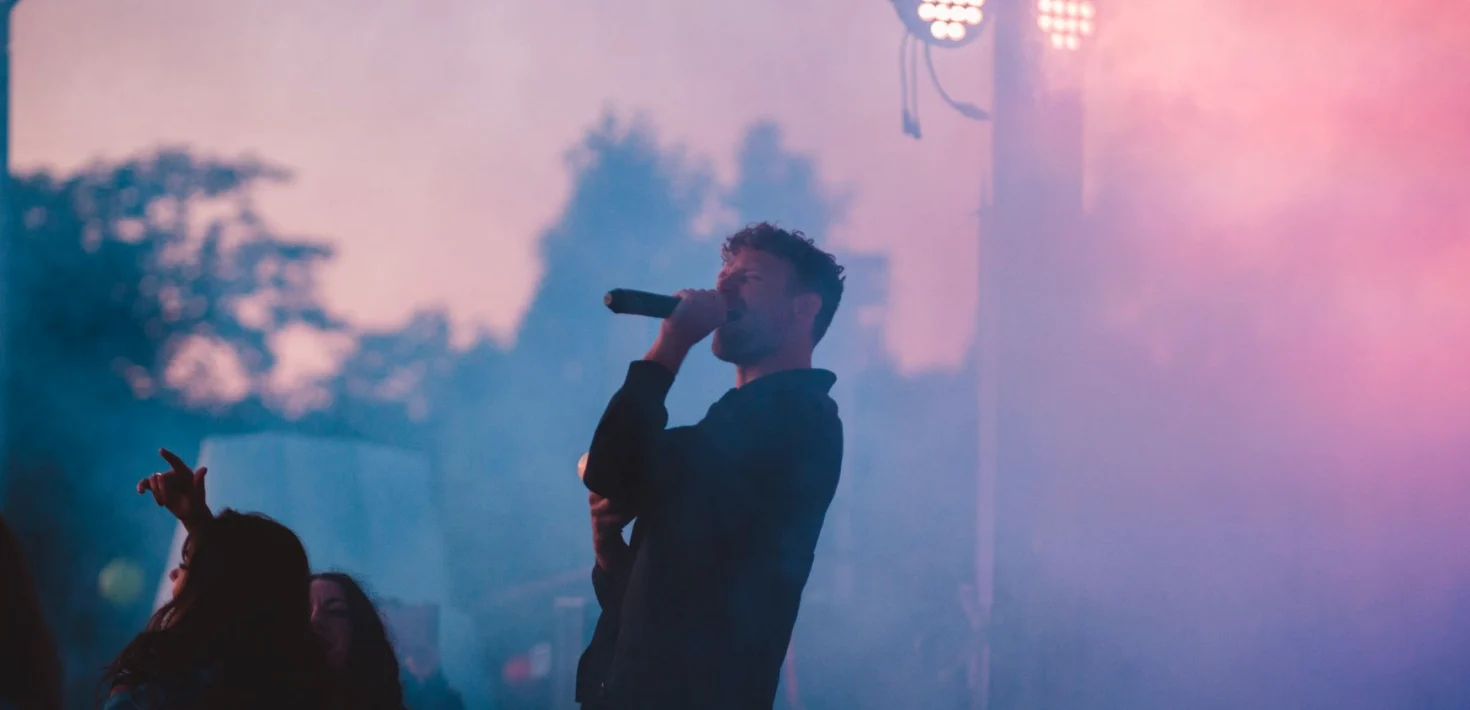
Autumn and winter festival broadcast: what to settle early
Priya Nair on planning stage and screen coverage for the colder months: weather, daylight, power and a crew that stays sharp through long evenings.
Why the cold months change the plan
Most people picture festival broadcast in July, but the autumn and winter calendar has its own run of outdoor gigs, lantern events, bonfire-night shows and party nights in marquees. The brief looks familiar, yet almost everything underneath it shifts once the temperature drops and the days shorten.
I switch a lot of live music, and the first thing I ask an organiser in these weeks is when the first act goes on and when the last one finishes. Daylight is gone by early evening, so nearly the whole programme is shot under stage lighting. That changes how cameras behave, how screens read and how long operators can sit still before their concentration dips.
Our mobile crews cover stages and screens for festivals, concerts and party events, and the same crew can handle a summer field or a November car park. What differs is the preparation, and that is what these notes cover.
Light, exposure and what the cameras see
Short days mean you cannot rely on a bright sky to flatter the shot. Cameras that coped easily in July are now working at higher gain, and the picture picks up noise quickly if the stage is lit for the audience rather than for the lens. Ask your lighting designer early whether a wash is planned for the front of the stage.
Colour is the other issue. Cold-white LED fixtures and warm tungsten-style looks can sit side by side in a single scene, and a vision mixer ends up cutting between cameras that render the same singer differently. A short line-up before doors open, with everyone looking at the same performer, saves a lot of correction later.
Rain and mist add haze that can look lovely in a wide shot and soft on a close one. I like to agree one or two safe angles in advance, so that if conditions turn we still have a clean, readable programme to cut to.
- Agree a camera-friendly front wash with the lighting designer
- Line up all cameras on one performer before doors
- Pick one or two wide angles that survive haze and drizzle
Weather cover for people and kit
Equipment cares about damp more than it cares about cold. Connectors, camera bodies and monitors need proper covers, and cable runs need to sit off the ground where puddles form. A tent for the production position is not a luxury at this time of year; it is the difference between a calm gallery and a wet one.
Operators need the same consideration. Cold hands make for clumsy cuts, and a vision mixer who is shivering will not be as quick as one who is comfortable. We plan for heated or at least sheltered positions, hot drinks on a schedule and rest breaks that fit the running order.
Wind is worth a separate thought. Tall camera positions, hanging screens and lightweight tower structures all behave differently on a blustery night, and the person responsible for the site should be able to call a hold on any of them without a long conversation.
- Rain covers for every camera and cable joint
- A sheltered, lit position for the production team
- A named person who can pause elevated camera positions in high wind
Screens, sightlines and the crowd
Side screens do much of their best work in the dark, when contrast is generous. Still, image magnification only helps if the audience can see the displays, so walk the site with the production lead and check what the back of the crowd actually sees. In winter, people stand closer together and wear hats and hoods, which narrows sightlines.
Cut pace matters on screens. A slow, confident rhythm suits a ballad, while a quick set can take a tighter cutting pattern. I usually agree with the director how often we show the crowd, since a cold, delighted audience on a big screen lifts the whole field.
If the event is also streamed, the screen feed and the stream feed may want different treatment. Graphics that suit a venue may be too busy for a small phone screen, and a plan for both saves arguments on the night.
Power, cables and the long evening
Cold shortens battery life, and heaters, lighting and extra screens draw more power than a summer line-up. Ask early how much supply the site really has and where it comes from. A generator that was fine for a daytime set can struggle when everything is switched on after dark.
Cable routes deserve a walk-through in daylight, because they will be crossed in the dark by tired people. Ramps, covers and clear marking protect both the crew and the signal path. Daniel Foster, our technical engineer, likes to leave a spare route for the main feeds so a single fault does not take the show down.
Long evenings also mean long shifts. Plan relief for operators who have been on since the afternoon, and agree who takes over if anyone has to step away. A well-rested second pair of hands is quietly the best safeguard a live show has.
- Confirm real power supply and backup before load-in
- Walk cable routes in daylight and mark them clearly
- Plan operator relief for shifts that run past midnight
Questions to settle with your organiser
Before the season gets busy, sit down with the people running the event and agree the basics in writing. When do doors open and when does the last act finish? Where will the production position sit, and is it sheltered? Who decides if conditions force a change to the running order?
It also helps to decide what the broadcast is for. A recording for the archive, a live stream for people at home and a screen for the crowd each ask for slightly different choices in cameras, graphics and pace. Clear priorities make for a calmer day.
Finally, agree how everyone talks during the show. A single intercom line, a named director and a short list of cues keep a cold, noisy night under control, and a quiet gallery is usually a sign that the planning was done properly.
Cold-season festival work rewards early decisions: light that suits the lens, shelter for people and kit, honest power figures and a crew with proper relief. None of it is complicated, but all of it is easier to fix in a planning call than on a dark, wet site at eight in the evening. If you have an event coming up in these months, get in touch and we will talk it through.
Priya Nair
Lead Vision MixerPriya specialises in fast multi-camera switching for music and festival productions. She trains our newer operators.
Talk through your festival or concert broadcast
Tell us about the stage, the date and what the broadcast is for. We will reply with questions, a suggested crew and a straightforward plan for the production position.
Contact- Share the venue, date and running order
- Say whether screens, stream or recording matter most
- We reply with a crew plan and the next steps